Sleeping during a heatwave is hard because the problem starts long before bedtime. By the time you are lying in a warm room with heavy bedding, a glowing laptop, and windows opened at the wrong moment, the room may already be holding hours of stored heat.
The most useful approach is boring in the best way: block sun early, reduce indoor heat, ventilate only when outdoor air helps, set the fan safely, and keep the sleeping setup light. This guide is comfort guidance, not medical advice.
Quick answer: Start cooling the room before bedtime, block daytime sun, open windows only when outdoor air is cooler and safe, use fans carefully for airflow rather than as a solution for dangerous indoor heat, use light bedding, and move to a cooler room or location if needed.
30-minute hot-night routine
| Time | What to do | Why it helps |
|---|---|---|
| 30 minutes before bed | Check indoor and shaded outdoor temperature. | You can decide whether windows should stay closed or ventilation will help. |
| 25 minutes before bed | Turn off heat-producing electronics and avoid cooking. | Small heat sources add up in a bedroom or apartment. |
| 20 minutes before bed | Open windows only if outdoor air is cooler, clean enough, and safe. | Cooler outdoor air can help flush stored heat when conditions are right. |
| 15 minutes before bed | Place a fan several feet from the bed and aim airflow across the room. | Gentle airflow is usually more comfortable than blasting air at your face. |
| 10 minutes before bed | Switch to light bedding and breathable sleep clothes. | Heavy fabric traps warmth and makes it harder to settle. |
| 5 minutes before bed | Put water, phone, and a simple backup plan nearby. | If the room stays too hot, you can move rooms or contact someone quickly. |
Start before the bedroom feels hot
The best hot-night sleep routine starts during the day. Close blinds or curtains before direct sun hits the window, especially in west-facing bedrooms that bake in the late afternoon. A shaded room is easier to sleep in than a room that has absorbed sunlight for hours.
Apartment example
In a small apartment, choose the coolest room as your evening base. It may be the bedroom, but it could also be a shaded living room or hallway. If one room gets strong sun, close it off when doing so does not block useful airflow.
Sunny window example
If sun lands on the bed, floor, or dresser, close blinds earlier the next day. Once those surfaces heat up, a fan can move air but cannot quickly erase the stored warmth.
When to open windows before sleep
Do not open windows by habit. Keep them closed while outdoor air is hotter than indoor air, or when smoke, poor air quality, rain, noise, or security concerns make opening them unsafe. Open windows when outdoor air becomes cooler and safe to bring inside.
For the full window decision guide, read Should You Open Windows During a Heatwave?.
Use one intake and one exhaust
If your layout allows, open a cooler shaded window as the intake and a warmer window as the exhaust. Pointing a fan outward from the hotter side can help push trapped heat out. If you have only one window, exhaust may still help after outdoor air cools, but expectations should be modest.
Fan guidance for hot nights
Fans can improve comfort and airflow, but local guidance differs. CDC guidance says fans should not be relied on around or above 90°F/32°C indoor temperatures. UK guidance says fans may be used below 35°C but should not be aimed directly at the body. Follow your local public health advice, especially during official heat alerts.
Bedroom fan placement
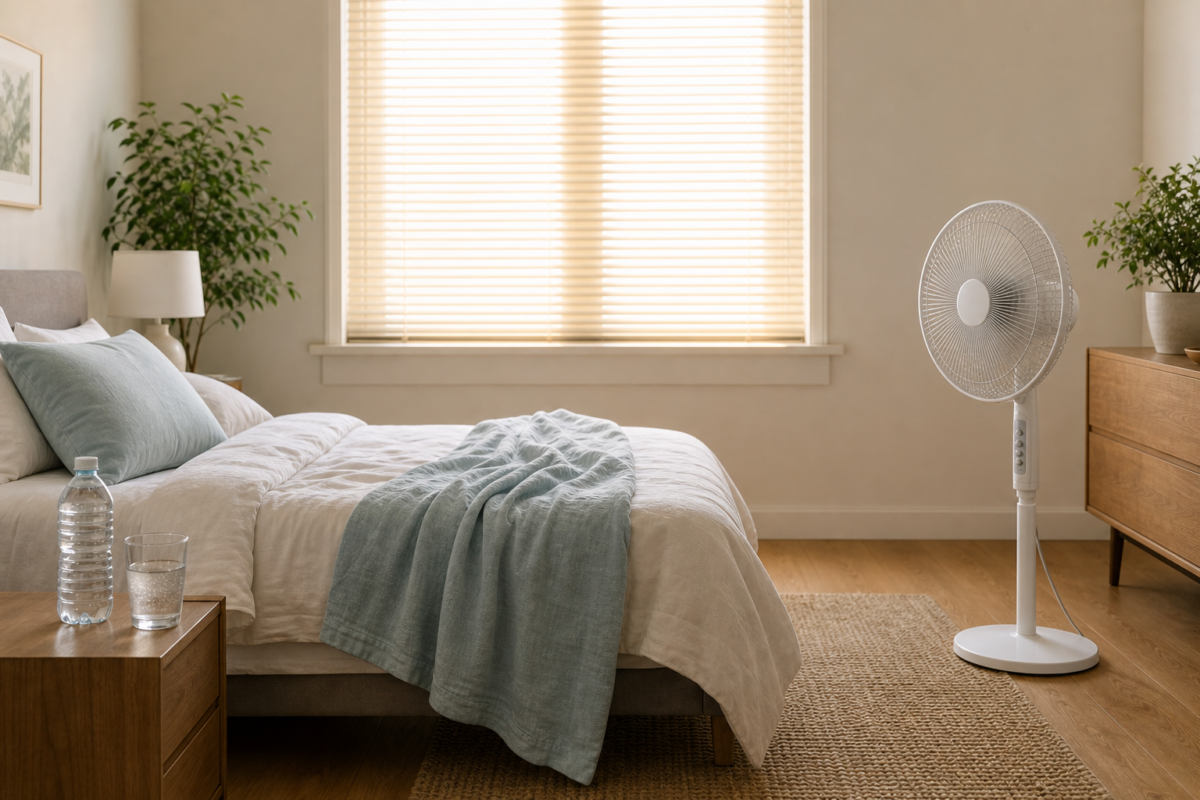
Place the fan several feet from the bed, ideally around mattress height, and aim airflow across your torso and legs or across the room. Oscillation can make the airflow softer. Keep cords away from walking routes.
When a fan is not enough
If the room remains dangerously hot, do not treat the fan as the solution. Move to a cooler room, lower floor, public cooling location, friend’s home, or another genuinely cooler place. For more layouts, see 7 Fan Tricks for Hot Rooms.
Reduce heat sources before bed
A hot bedroom often has hidden heat sources. Turn off unused gaming consoles, desktop computers, large monitors, bright lamps, and charger clusters. Delay laundry and dishwashing until cooler hours if possible.
Kitchen example
Late cooking can warm the kitchen and nearby rooms. During a heatwave, choose no-cook meals, microwave shortcuts, or earlier prep. After cooking, ventilate only when outdoor air is cooler or when a built-in exhaust can remove heat safely.
Lighten the sleep setup
Use a light sheet, breathable sleep clothes, and the thinnest pillowcase that feels comfortable. If the mattress holds heat, try sleeping on the cooler side of the bed, a lower room, or a shaded living-room setup for the worst nights.
A cool or lukewarm shower can be part of the routine if it feels comfortable, but it does not make a dangerous room safe. Read Cold Shower vs Lukewarm Shower in Hot Weather for a practical comparison.
Common sleep mistakes during a heatwave
Waiting until bedtime to cool the room
By bedtime, the room may already be full of stored heat. Start with daytime shade, reduced electronics, and evening ventilation when conditions allow.
Opening windows while outdoor air is hotter
If outside air is hotter than indoor air, open windows can make the bedroom warmer. Compare temperatures before opening up.
Blasting a fan directly into the face all night
Close, direct airflow can feel drying or uncomfortable. Aim the fan across the bed or use oscillation instead.
Using heavy bedding
Duvets, thick blankets, and heavy pajamas trap warmth. Switch to lighter layers and keep extra bedding nearby only if the room cools later.
Cooking or using heat-producing electronics late
Ovens, dryers, gaming PCs, and large screens add heat right when the bedroom needs to cool down.
Ignoring symptoms because it is “just hot”
Do not dismiss severe dizziness, confusion, fainting, worsening symptoms, or feeling very unwell. Read Heat Exhaustion Warning Signs to Know and seek local help when needed.
If the bedroom never cools
Some homes stay hot all night, especially top-floor apartments and rooms with poor insulation. If your bedroom does not cool, plan a backup: shaded living room, lower floor, friend’s home, library, shopping center, community cooling center, or another cooler location.
Pack basics with the Heatwave Survival Kit: A Practical Checklist. For a full room strategy, use How to Cool a Room Without AC.
Frequently asked questions
Should I sleep with windows open during a heatwave?
Open windows only when outdoor air is cooler than indoor air, air quality is acceptable, and the opening is safe. Close them again before outdoor heat returns.
Where should I place a fan for sleep?
Place it several feet away and aim airflow across the bed or room rather than directly at your face. Follow local public health guidance during heat alerts.
Is a cold shower before bed always better?
No. A shower should feel comfortable, not shocking. Cool or lukewarm water may feel refreshing, but showers do not make dangerous indoor heat safe.
What if I cannot sleep because the room is too hot?
Move to the coolest safe room or another cooler location if needed. Household comfort tips should not replace local heat-safety guidance.
Sources and safety guidance
Sources used: CDC About Heat and Your Health, CDC/NIOSH Heat-related Illnesses, and UKHSA/GOV.UK Beat the Heat: keep cool at home checklist. Follow local public health, emergency management, and weather guidance for your area.