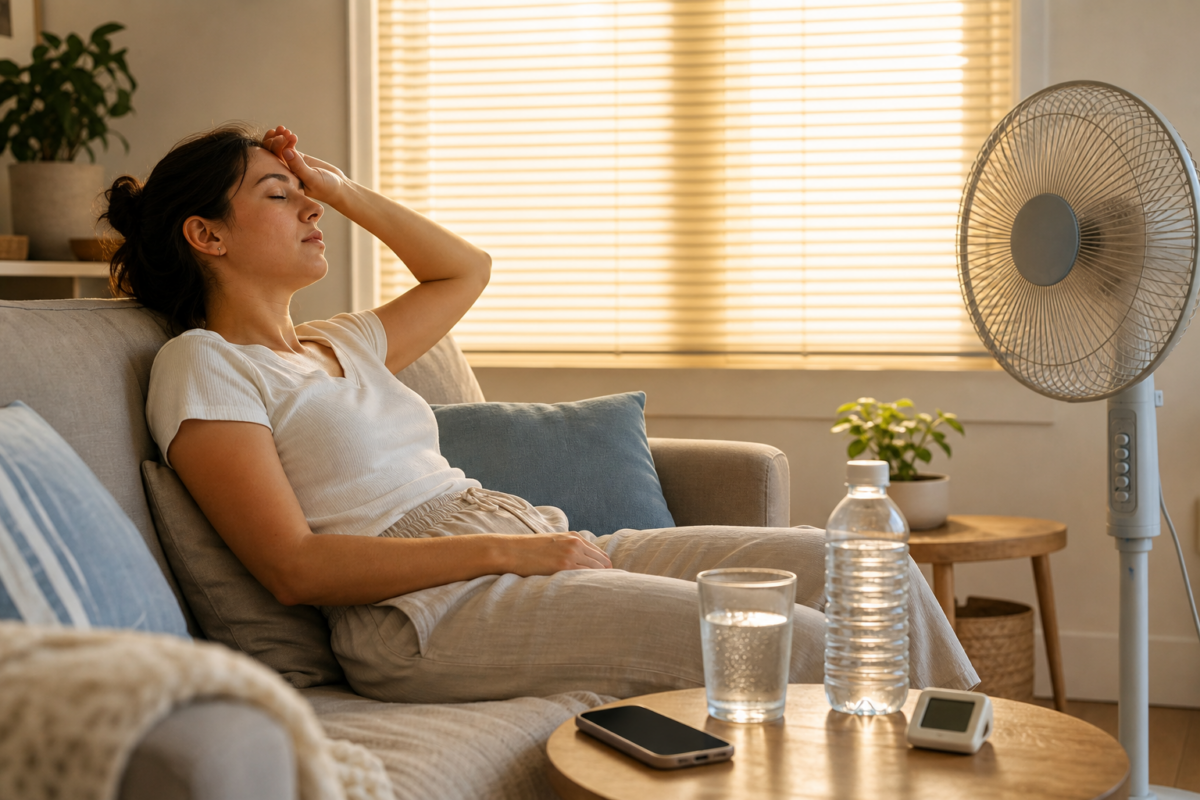
Heat exhaustion warning signs can be easy to brush off at first. A headache becomes “just a long day.” Dizziness becomes “I stood up too fast.” Heavy sweating becomes “it is summer, of course.” During a heatwave, those changes deserve attention, especially if the room is hot, activity has been heavy, or symptoms are getting worse.
This article is a heat safety awareness guide, not a diagnosis tool. Use it to notice possible warning signs sooner, make safer decisions, and know when comfort tips are no longer enough.
Quick answer: Possible heat exhaustion warning signs can include headache, nausea, dizziness, weakness, irritability, thirst, heavy sweating, elevated body temperature, and decreased urine output. Stop activity, move to a cooler place, contact someone, and seek local emergency help for red flags such as confusion, fainting, seizure, loss of consciousness, slurred speech, severe shortness of breath, or worsening symptoms.
Heat warning signs at a glance
| Situation | Signs to notice | What to do |
|---|---|---|
| Hot room plus mild symptoms | Headache, thirst, weakness, nausea, dizziness, heavy sweating | Stop activity, move cooler, contact someone, and monitor closely. |
| Symptoms during chores or exercise | Feeling unusually weak, lightheaded, overheated, or unwell | Stop the activity and move to shade, air conditioning, or a cooler room. |
| Possible dehydration concern | Thirst, dry mouth, reduced urine, dark urine | Sip water only if awake, alert, and able to drink safely. |
| Serious red flags | Confusion, fainting, seizure, loss of consciousness, slurred speech | Seek local emergency help right away. |
| Home stays dangerously hot | Room does not cool overnight, symptoms continue or worsen | Move to a genuinely cooler place and follow local heat guidance. |
What to do immediately if symptoms appear
If heat symptoms appear, act early and keep the steps simple. These actions are not a substitute for emergency care when red flags are present, but they can reduce heat exposure while you decide what to do next.
- Stop activity. Pause chores, exercise, cooking, errands, or anything that is adding heat or effort.
- Move to a cooler place. Choose shade, air conditioning, a cooler room, a library, a cooling center, or another safer location.
- Loosen heavy clothing. Remove extra layers, heavy fabrics, or tight items if it is safe and appropriate to do so.
- Sip water only when safe. Offer small sips only if the person is awake, alert, and able to drink safely. Do not force fluids.
- Contact someone. Call, text, or alert a nearby person so no one is handling symptoms alone.
- Get urgent help for red flags. Seek local emergency help for confusion, fainting, seizure, loss of consciousness, slurred speech, severe shortness of breath, or worsening symptoms.
Common warning signs to notice
CDC/NIOSH lists heat exhaustion symptoms such as headache, nausea, dizziness, weakness, irritability, thirst, heavy sweating, elevated body temperature, and decreased urine output. The CDC’s general heat page also highlights overheating symptoms such as muscle cramping, unusually heavy sweating, shortness of breath, dizziness, headaches, weakness, and nausea.
Look for changes, not just single symptoms
One mild symptom may have many causes. What matters during heat is the pattern: symptoms that appear in a hot room, get worse with activity, or do not improve after moving to a cooler place. If you feel “off,” slow down and take it seriously.
Check on other people
People living alone, older adults, children, pregnant people, outdoor workers, and people with chronic health conditions may need extra planning. A simple text or phone check-in can catch problems earlier. Ask practical questions: Is the room cooling? Is there water nearby? Is there a cooler place to go?
Make the room safer while you respond
Household cooling steps are not medical treatment, but they can reduce additional heat exposure while you decide what to do next.
Apartment room example
Move to the coolest room in the apartment, usually the least sunny room or a lower-floor space if available. Keep water and a phone nearby. If the home is still dangerously hot, make a plan to leave for a cooler location such as a library, shopping center, friend’s home, or community cooling center.
Sunny window example
Close blinds or curtains before direct sun hits the glass. Sunlight warms floors, furniture, bedding, and walls. A fan blowing across a sunlit room may only move warm air around, so shade comes first.
Bedroom example
If symptoms show up at night, do not just lie still and hope the room improves. Turn on a low light, check whether the room is cooling, and contact someone if you feel worried or alone. Move to a cooler room if one exists.
When to close windows and when to ventilate
Keep windows closed when outdoor air is hotter than indoor air, or when smoke, pollution, noise, rain, or security concerns make opening them unsafe. Ventilate when outdoor air becomes cooler and safe to bring inside.
Evening ventilation example
After sunset, compare indoor temperature with shaded outdoor air. If outside is cooler, open a secure shaded intake window and a warmer exhaust window. Point a fan outward from the hot side to help push trapped heat out. Close up again in the morning before outdoor heat returns.
For a deeper window plan, read Should You Open Windows During a Heatwave?.
Fan placement and fan limits
Fans may help comfort and airflow, but they should not be relied on during dangerous indoor heat, especially around or above 90°F/32°C. If a room is dangerously hot or symptoms worsen, prioritize a cooler place and local health guidance.
Bedroom placement
Place the fan several feet away and aim airflow across the bed rather than directly into the face. Keep cords out of walking paths. If the room is dangerously hot, do not treat the fan as the solution.
Kitchen placement
In a hot kitchen, reduce heat at the source. Avoid the oven during peak heat, delay dishwashing, and use no-cook meals when practical. Never point a portable fan at a gas flame.
Reduce indoor heat sources
Small heat sources add up. Turn off unused electronics, game consoles, bright lamps, desktop computers, and extra monitors. Delay laundry and dishwashing until cooler hours if household rules allow. For a full room plan, see How to Cool a Room Without AC and 7 Fan Tricks for Hot Rooms.
Make a simple check-in plan
A check-in plan is not complicated. Pick one or two people who will notice if you do not reply. During a heatwave, send a morning and evening message: room temperature, how you feel, and whether you have a cooler place to go. If you are checking on someone else, ask direct, practical questions instead of only “Are you okay?”
What to keep nearby
Keep a charged phone, water, keys, medication as normally directed, and a written contact list within reach. If you may need to leave, pack the basics before the hottest part of the day. Planning early is much easier than making decisions while overheated and tired.
A simple evening safety routine
- Check people first. Notice headache, dizziness, nausea, weakness, heavy sweating, confusion, or worsening symptoms.
- Move cooler. Shift to the coolest room or leave for a cooler location if home remains hot.
- Close sunny blinds. Block direct sun before it heats surfaces.
- Reduce heat sources. Turn off electronics, skip the oven, and delay hot chores.
- Compare temperatures. Ventilate only when outdoor air is cooler and safe.
- Use fans carefully. Aim airflow across occupied space, but do not rely on fans in dangerous heat.
- Keep a check-in plan. Contact someone if you live alone or symptoms worry you.
Build the supplies side with the Heatwave Survival Kit: A Practical Checklist. For drinks that are not sugar-heavy, see A Low-Sugar Citrus Hydration Drink for Summer.
Frequently asked questions
What are common heat exhaustion warning signs?
CDC/NIOSH lists signs such as headache, nausea, dizziness, weakness, irritability, thirst, heavy sweating, elevated body temperature, and decreased urine output.
When should heat symptoms be treated as urgent?
Confusion, fainting, seizures, loss of consciousness, slurred speech, severe shortness of breath, or worsening symptoms should be treated as urgent. Seek local emergency help.
Can fans prevent heat exhaustion?
Fans may help comfort and airflow, but they should not be relied on during dangerous indoor heat, especially around or above 90°F/32°C.
What should I do if my home stays too hot?
Move to a cooler place when possible, check local cooling-center information, and use household cooling tips only as temporary comfort measures.
Sources and safety guidance
Sources used: CDC About Heat and Your Health and CDC/NIOSH Heat-related Illnesses. Follow local public health, emergency management, and weather guidance for your area. This article is for awareness and practical planning, not diagnosis or individualized medical advice.