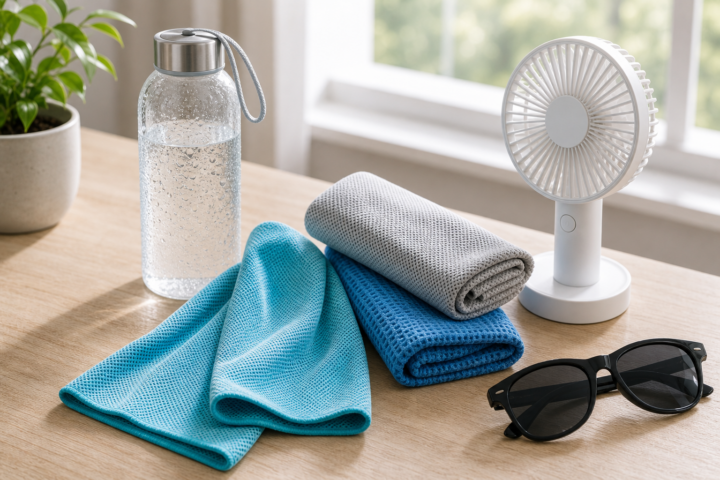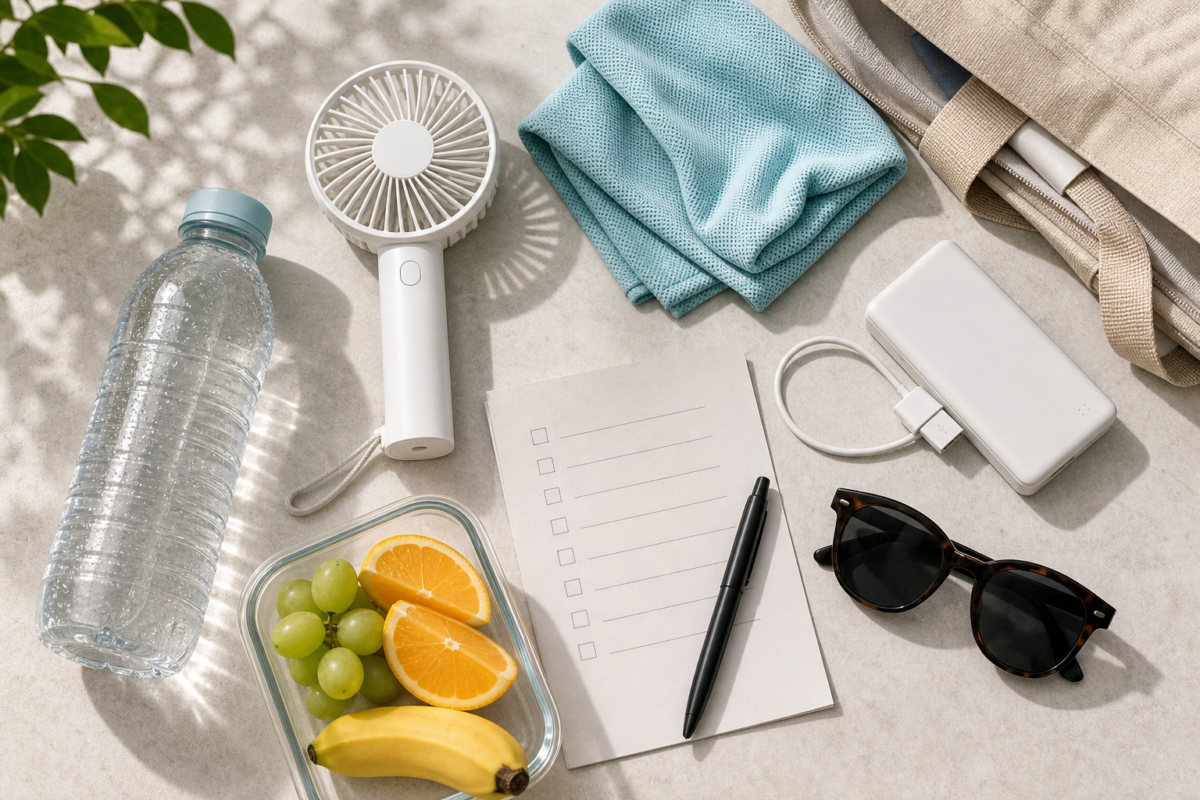
A heatwave survival kit is not about panic-buying gadgets. It is a small, practical set of supplies and decisions that helps your household get through very hot days with less scrambling: water, power backup, shade, cooling comfort items, food that does not heat the kitchen, contact details, and a plan for where to go if home stays too hot.
The best time to assemble it is before the forecast turns serious. Once an apartment is already hot, the phone is low, and everyone is tired, even simple decisions become harder. Think of this kit as a calm little “future you” favor.
Quick checklist: Water bottles, easy no-cook food, a charged phone and power bank, indoor thermometer, fan or battery fan, cooling towel or clean cloth, light bedding, medication list, important contacts, local cooling-center information, pet or child supplies, and a plan for reaching a cooler place.
Heatwave kit at a glance
| Category | What to prepare | Why it helps |
|---|---|---|
| Water and drinks | Refillable bottles, extra water, low-sugar drinks if you like them | Keeps hydration supplies visible and easy to grab. |
| Food | No-cook meals, fruit, shelf-stable snacks, simple breakfast options | Reduces oven and stovetop use during peak heat. |
| Power | Charged phone, power bank, charging cables, battery fan if available | Helps you stay reachable and keep small comfort tools running. |
| Room cooling | Thermometer, fan, cooling towel, light curtains, shade plan | Helps you decide when to close up, ventilate, or leave for a cooler place. |
| Health and contacts | Medication list, emergency contacts, local public health and weather links | Makes check-ins and decisions easier when everyone is tired. |
| Go-bag basics | Keys, wallet, transit card, pet/child supplies, sunglasses, light layer | Lets you leave quickly for a library, cooling center, or friend’s home. |
Start with water, but do not stop there
Water is the obvious heatwave kit item, but the practical part is placement. Put bottles where people actually spend time: bedside table, kitchen counter, desk, and the cooler room you plan to use during the day.
Make it easy to drink
Use bottles or cups people like using. If plain water gets ignored, add fruit, mint, or a low-sugar drink option. The goal is not a perfect wellness routine; it is making basic hydration easy when the day feels heavy.
For drink ideas, see A Low-Sugar Citrus Hydration Drink for Summer.
Plan food that will not heat the kitchen
An oven can make a small apartment feel worse fast. Stock foods that do not require cooking during the hottest hours: wraps, salads, yogurt bowls, fruit, crackers, hummus, canned beans, nut butter, and simple refrigerated leftovers prepared earlier.
Kitchen example
If the kitchen gets afternoon sun, prep early in the morning or after the apartment has cooled. Use the microwave for short tasks, avoid the oven when possible, and delay the dishwasher until cooler hours. Try 10 No-Cook Meals for Hot Weather for ideas.
Build a power and communication mini-kit
Keep a phone charger, power bank, small flashlight, and important numbers together. During a heatwave, communication is part of comfort and safety: you may need to check on someone, find a cooling location, confirm transit, or follow local alerts.
Check-in plan
Choose one or two people for a simple morning and evening check-in. This is especially useful for anyone living alone, older relatives, neighbors, or households with infants, pets, or health needs. Ask practical questions: Is the room cooling? Is the phone charged? Is there a cooler place to go?
Prepare the room before it gets hot
A kit works best with a room plan. Choose the coolest room in the home, usually the space with the least afternoon sun and fewest heat-producing appliances.
Sunny window example
Close blinds before direct sun hits the window. Sunlight warms floors, bedding, counters, and furniture. Once those surfaces are hot, a fan can move air but cannot quickly undo the stored heat.
When to close windows and when to ventilate
Keep windows closed while outdoor air is hotter than indoor air. Ventilate when outdoor air becomes cooler, air quality is acceptable, and the opening is secure. In the evening, use one shaded window as an intake and one warmer window as an exhaust if your layout allows.
For the full room strategy, read How to Cool a Room Without AC and Should You Open Windows During a Heatwave?.
Add comfort tools with realistic expectations
Fans, cooling towels, light bedding, and damp cloths can improve comfort. They are not a guarantee that a dangerously hot room is safe.
Fan placement
Place a fan several feet away and aim airflow across the occupied area. When outdoor air is cooler, point a fan outward from a hot window to exhaust trapped heat. In a bedroom, aim airflow across the bed rather than directly into your face. For more examples, see 7 Fan Tricks for Hot Rooms.
Cooling towels and cloths
A cooling towel or clean damp cloth can feel refreshing, especially with airflow. Keep it clean, wash it after sweaty use, and treat it as a comfort item. If you like product comparisons, read Best Cooling Towels: What to Look For.
Medication, documents, children, and pets
Make a simple medication list with names, normal timing, storage notes, and key contacts. Do not change medication routines because of the weather without professional advice. Keep copies of important contacts somewhere accessible even if your phone battery is low.
Household-specific supplies
Add items for your actual home: formula or diapers, pet water bowl, pet carrier, spare glasses, mobility aids, building contact details, or a printed transit route to a cooler place. A good kit is not generic; it matches your household.
Know where to go if home stays too hot
If the apartment never cools overnight, do not keep escalating household hacks. Identify nearby cooler places before the hottest day: library, community cooling center, shopping center, friend’s home, shaded public building, or another safe location.
Review symptoms and red flags with Heat Exhaustion Warning Signs to Know. The point is not to diagnose yourself; it is to know when comfort tips are no longer enough.
Download the printable heatwave checklist
Printable PDF coming soon: We are preparing a one-page Stay Cool Daily heatwave checklist you can print, stick on the fridge, or keep with your emergency supplies. For now, use the quick checklist and table above to build your kit.
A simple evening reset routine
- Refill water. Put bottles in the bedroom, kitchen, and cooler room.
- Charge devices. Plug in phones, power banks, and battery fans.
- Close sunny blinds. Block morning sun before it heats surfaces.
- Reduce heat sources. Shut down electronics and skip oven use.
- Check temperatures. Ventilate only when outdoor air is cooler and safe.
- Set up the sleeping area. Use light bedding and safe fan placement.
- Confirm tomorrow’s plan. Know who you will check on and where you can go if home stays too hot.
Frequently asked questions
What is the most important heatwave kit item?
The most important item is a plan: water access, communication, a cooler place to go, and supplies matched to your household.
Do cooling towels belong in a heatwave kit?
They can be useful comfort items, especially with airflow, but they are not a substitute for shade, ventilation, or a genuinely cooler place.
Should I stock electrolyte products?
Some households like having low-sugar drink options available, but many everyday situations can be handled with water and regular food. Follow individual professional guidance when it applies.
What should renters add to the checklist?
Add building contacts, entry details, approved window and fan setups, portable shade, a lightweight go-bag, and a confirmed route to a cooler location.
Sources and safety guidance
For general heat safety and planning, follow local public health guidance, emergency management updates, and official weather alerts for your area. Useful starting points include CDC heat and health guidance, National Weather Service heat safety resources, and your local city or county emergency information.