A cold shower sounds like the obvious answer in hot weather. You feel sticky, the room feels heavy, and icy water seems like the fastest reset. In real life, the best choice is usually more practical: a shower that feels comfortably cool or lukewarm, followed by a room setup that keeps you from reheating immediately.
The goal is not to “hack” your body or force a dramatic temperature change. The goal is simple comfort: rinse off sweat, lower the sticky feeling, change into breathable clothes, and step into a room where shade, ventilation, and fan placement are working with you.
Quick answer: For everyday hot-weather comfort, choose water that feels refreshing but not shocking. A cool or lukewarm shower is usually more practical than an icy one, especially before bed. A shower can help you feel fresher, but it cannot make dangerous indoor heat safe or treat heat exhaustion or heatstroke.
| Shower choice | Best for | Watch out for |
|---|---|---|
| Cool shower | A quick refresh after errands, commuting, or light chores. | Water that feels shocking, makes you gasp, or leaves you tense. |
| Lukewarm shower | A calmer pre-bed routine when you want to rinse off without waking yourself up. | Making the bathroom steamy or stepping back into a hot bedroom. |
| Cool water on skin or clothes | Small comfort breaks for neck, wrists, face, or a clean damp cloth. | Wet bedding, skin irritation, or relying on it in dangerous heat. |
| Cool foot bath or wrist rinse | A low-effort comfort option when you do not want a full shower. | Slippery floors, water that is too cold, or standing up too quickly. |
For red-flag symptom awareness, read Heat Exhaustion Warning Signs to Know.
The short answer
For most hot-weather routines, choose a shower temperature that feels refreshing but not shocking. That might be cool, lukewarm, or somewhere between. If very cold water makes you tense, gasp, or shiver, it is probably not the most useful choice for winding down.
When a cool shower feels good
A brief cool rinse can feel great after walking home, sitting on public transport, or doing light chores in a warm apartment. It may be most useful as a quick refresh, not a long pre-bed ritual. Keep it comfortable and step out before you feel chilled or tense.
When lukewarm is easier
A lukewarm shower is less dramatic but often more sustainable. It rinses sweat, sunscreen, and city grime without the shock factor. Before bed, lukewarm water can also feel calmer, especially when paired with light bedding and gentle airflow.
When to avoid a very cold shower
A very cold shower is not automatically better. Water that makes someone gasp, tense up, shiver, feel dizzy, or feel worse is probably too cold for a comfort routine. The point is to feel steadier and fresher afterward, not to turn the shower into a stress test.
If you are already feeling very unwell in extreme heat, do not rely on a shower as the fix. Move to a cooler place, contact someone, and seek local help if symptoms are severe or worsening.
Set up the room before you shower
The shower is only half the routine. If you step out into a hot bedroom with open sunny blinds and a computer blasting heat, you will feel sticky again within minutes.
Apartment room example
In a small apartment, close blinds on the sunny side before the room heats up. If outdoor air is hotter than indoor air, keep windows closed. After sunset, compare indoor air with shaded outdoor air. If outside is cooler and air quality is acceptable, open a secure window and ventilate.
Sunny window example
A west-facing window can turn a bedroom into a warm box. Close blinds before direct sun lands on the floor or bed. A fan blowing across sun-warmed furniture will not fix the stored heat quickly, so shade matters before airflow.
Bathroom humidity example
Even a quick shower can add moisture to a small bathroom. Run the bathroom exhaust fan if you have one, keep the door open afterward if privacy allows, and avoid leaving damp towels piled in the bedroom. In muggy weather, humidity can make a room feel warmer even when the thermometer has not changed much.
Fan placement after a shower
After a shower, a fan should move air gently across the room or across your body. Do not place it inches from your face. That can feel drying and unpleasant, especially when you are trying to sleep.
Bedroom placement
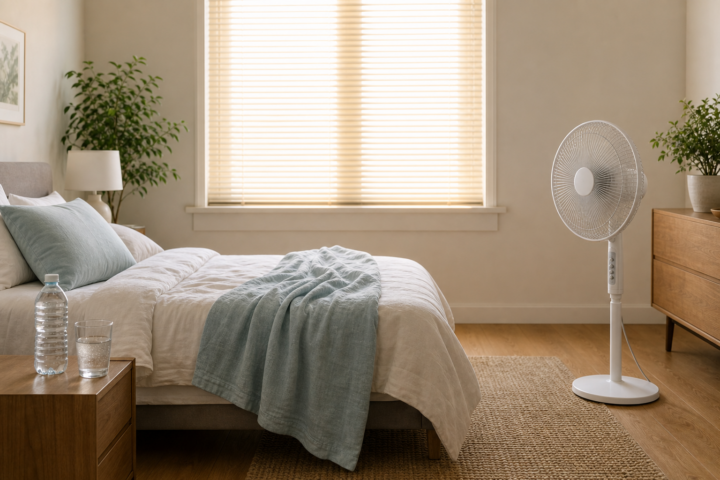
Place the fan several feet from the bed, roughly at mattress height, and aim it across your torso and legs. Oscillation can make the airflow softer. Keep cords away from walking routes, especially if you get up at night.
Ventilation placement
If outdoor air is cooler, point one fan outward from a hot window to exhaust trapped air, then open a shaded window elsewhere as the intake. This works better than putting every fan in the same corner. For more layouts, see 7 Fan Tricks for Hot Rooms.
Reduce indoor heat sources first
Showering will not help much if the home is still producing heat. Before your evening routine, switch off unused electronics, delay laundry, and avoid oven cooking during peak heat.
Kitchen example
If the kitchen is already hot, skip a late oven meal. Choose a no-cook dinner, microwave something brief, or prep earlier in the day. After cooking, ventilate only when outdoor air is cooler or when a safe built-in exhaust can remove heat. Never point a portable fan at a gas flame.
Bedroom electronics
Gaming consoles, desktop computers, bright lamps, and large monitors can make a bedroom feel warmer. Shut them down before your shower so the room has a chance to settle while you rinse off.
A simple evening cooling routine
- Block sun early. Close blinds before direct sun heats the room.
- Lower indoor heat. Avoid the oven, delay laundry, and turn off unused electronics.
- Check temperatures. Open windows only when outdoor air is cooler and safe to bring inside.
- Ventilate with purpose. Use one opening for intake and one warmer opening for exhaust.
- Take a comfortable shower. Choose cool or lukewarm water, not a temperature that makes you tense.
- Dry fully. Put on breathable sleep clothes and avoid heavy robes or thick bedding.
- Place the fan gently. Aim airflow across the bed or room, not directly into your face.
For a fuller sleep routine, read How to Sleep During a Heatwave. For whole-room cooling, use How to Cool a Room Without AC.
Which shower is better before bed?
The better shower is the one that leaves you comfortable afterward. If cold water wakes you up or makes you feel braced, choose lukewarm. If a short cool rinse helps you feel fresh without discomfort, that may work well. Keep the rest of the bedroom routine calm: low light, light bedding, water nearby, and a fan positioned safely.
What not to expect
A shower cannot cool a dangerously hot apartment, replace air conditioning, or treat serious heat symptoms. If your home does not cool overnight, plan time in a cooler public place, friend’s home, or community cooling center. The Heatwave Survival Kit Checklist can help you prepare.
Cold shower mistakes to avoid
Making the water painfully cold
You do not get extra points for suffering. If the water makes you gasp, clench, or rush through the shower, choose a gentler temperature. A routine you can repeat calmly is more useful than a dramatic one you dread.
Ignoring the room afterward
If the bedroom is still absorbing sunlight, the shower benefit disappears quickly. Close sunny blinds, reduce heat sources, and ventilate at the right time. The room plan does the heavy lifting; the shower is just one comfort layer.
Frequently asked questions
Is a cold shower better than a lukewarm shower in hot weather?
Not always. A very cold shower can feel refreshing, but a comfortable lukewarm or cool shower is often easier to tolerate and repeat.
Should I shower right before bed during a heatwave?
It can be part of a comfort routine, especially if the bedroom is shaded, ventilated when outdoor air is cooler, and set up with gentle fan airflow.
Can a shower make a dangerously hot room safe?
No. A shower may improve comfort briefly, but dangerous indoor heat calls for a genuinely cooler place and local safety guidance.
Where should I put the fan after a shower?
Place it several feet away and aim airflow across the room or across your body, not directly into your face from close range.
Sources and safety guidance
For heat safety guidance, see CDC About Heat and Your Health, CDC Protect Yourself From the Dangers of Extreme Heat, and NHS Heatwave: how to cope in hot weather. Follow local public health, emergency, and weather guidance for your area.