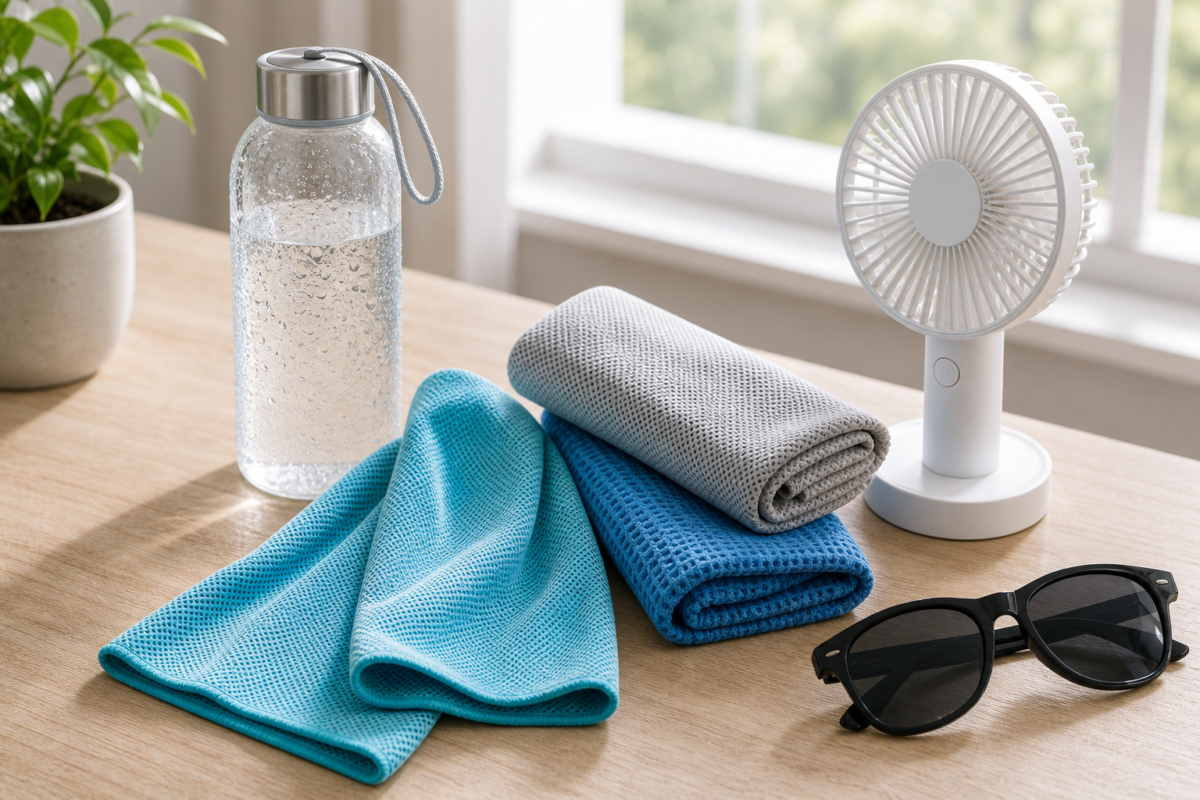
Cooling towels can be genuinely pleasant on hot days, but they are often marketed with more drama than they deserve. The best cooling towel is not the one with the loudest packaging. It is the one you will actually use: comfortable on your skin, easy to wet and wring, simple to wash, and practical to carry.
Think of a cooling towel as a comfort tool, not a safety device. It can help you feel fresher while walking, commuting, sitting in a warm apartment, or taking a break from light activity. It cannot make a dangerous room safe or replace a cooler environment during extreme heat.
Quick answer: Look for a cooling towel that feels comfortable when wet, is easy to wash, fits your bag, dries properly, and makes realistic claims. Cooling towels are comfort tools, not medical or emergency devices.
Cooling towel features at a glance
| Feature | What to look for | Why it matters |
|---|---|---|
| Texture | Soft fabric that feels good when wet | A scratchy towel will stay in the drawer. |
| Size | Large enough for neck or shoulders, small enough to carry | Oversized towels can feel heavy when damp. |
| Washing instructions | Simple machine washing or easy hand washing | Sweat, sunscreen, and outdoor dust build up quickly. |
| Portability/storage | A breathable pouch or easy-dry design | Wet sealed storage can lead to odor. |
| Product claims | Comfort-focused claims, not cure-style promises | Realistic wording is more trustworthy. |
| Value for money | Durable material at a price you would replace if needed | A useful towel should be affordable enough to use often. |
How cooling towels work
Most cooling towels use evaporation. You wet the towel, wring it out, and place it on your neck, shoulders, or arms. As water evaporates, the towel can feel cooler against the skin.
Airflow matters
A damp towel usually feels better with moving air. In an apartment room, that might mean wearing it while a fan moves air across your seating area. In a bedroom, it may be a short pre-bed comfort step while you ventilate the room. The towel is not cooling the whole room; it is helping your body feel more comfortable at the surface.
Humidity changes the experience
Evaporation is less efficient in very humid air. A towel may still feel refreshing when first wetted, but it may not stay cool-feeling as long. If you live somewhere muggy, prioritize texture, washability, and comfort over miracle claims.
How we choose cooling towels
Cooling towel recommendations should be based on ordinary use, not dramatic product copy. The most important tests are comfort when wet, easy washing, realistic product claims, portability, usefulness, and value for money.
Comfort when wet
A towel can feel soft when dry and unpleasant when soaked. Good testing means wetting it, wringing it out, wearing it around the neck, and checking whether the edges, labels, or texture become irritating.
Easy washing and drying
A towel used during hot weather will meet sweat, sunscreen, dust, and bag lint. If the care instructions are fussy, most people will not keep it clean. Easy washing and thorough drying matter more than fancy packaging.
Realistic claims and value
We prefer comfort-focused claims: “feels cool when wet,” “packs small,” or “machine washable.” Be cautious with language that sounds like medical protection. A good towel should also be priced so you can actually use it, wash it, and replace it when worn.
Best cooling towel by use case
Apartment rooms
In a warm apartment, use a towel as part of a larger room plan. Close blinds on sunny windows before direct sun arrives. Keep windows closed while outdoor air is hotter than indoor air. Ventilate later when outside air becomes cooler, and use a fan for gentle airflow across your seating area.
Bedrooms
A cooling towel can be useful before bed, but avoid soaking bedding. Use it while you set up the room: light bedding, water nearby, fan aimed across the bed, and windows opened only when outdoor air is cooler. For a full routine, read How to Cool a Room Without AC.
Kitchens
A towel around the neck may feel nice while preparing food, but the better move is to reduce heat sources. Skip the oven during peak heat, use no-cook meals, delay the dishwasher, and ventilate only when outdoor air helps. A towel cannot compete with a hot oven in a small kitchen.
Sunny windows and errands
If you are sitting near a sunny window, shade the glass first. If you are walking outside, wet and wring the towel before leaving, then refresh it with clean water when available. Choose a color and size you are comfortable wearing in public; that matters more than people admit.
How to use one safely and cleanly
Use clean water, wring the towel so it is damp rather than dripping, and stop using it if your skin feels irritated. Do not share damp towels casually. Wash it after sweaty or dirty use, and let it dry fully before storing it.
Cooling towels also belong in a practical heat kit if you like them. See Heatwave Survival Kit: A Practical Checklist for the bigger picture: water access, communication, power backup, and a plan for where to go if home stays too hot.
A simple evening cooling routine with a towel
- Block sun early. Close blinds before direct sun heats the room.
- Reduce indoor heat. Avoid the oven, delay laundry, and switch off unused electronics.
- Check temperatures. Open windows only when outdoor air is cooler and safe to bring inside.
- Use fan airflow carefully. Aim a fan across the occupied area, not at a wall.
- Refresh the towel. Wet, wring, and use it for comfort while the room ventilates.
- Stop if it feels unpleasant. Comfort tools should not cause skin irritation or make you feel worse.
What to avoid when buying
Rough seams and stiff edges
A cooling towel usually sits on the neck, shoulders, or face, so small comfort details matter. Check for scratchy seams, stiff labels, or fabric that clings unpleasantly when wet.
Medical-style promises
Skip products that imply they prevent or treat serious heat illness. A cooling towel can feel good; it is not emergency equipment. For warning-sign awareness, read Heat Exhaustion Warning Signs to Know.
Overbuying
Start with one or two towels before buying a multipack. Test how the material feels wet, how quickly it dries, and whether you actually reach for it. You can compare comfort experiments with Cold Shower vs Lukewarm Shower in Hot Weather and Cabbage Leaves Cooling Hack: A Comfort Test.
Quick buying checklist
- Choose a soft texture you would wear against your neck.
- Pick a size that fits your bag, not only your wish list.
- Check that cleaning instructions are realistic for frequent use.
- Avoid products that make emergency-style promises.
- Buy for your routine: commuting, apartment comfort, travel, or light outdoor breaks.
Frequently asked questions
Do cooling towels actually work?
A damp towel can feel cooler through evaporation, especially with airflow, but results vary by humidity, fabric, and use.
Can a cooling towel prevent heat illness?
No. Treat it as a comfort item, not a substitute for shade, hydration, a cooler environment, or urgent care when needed.
What size cooling towel is best?
A medium towel is easiest for most people to wear around the neck, pack in a bag, and rinse or wash regularly.
How often should I wash a cooling towel?
Follow the manufacturer’s instructions and wash it whenever it is dirty, sweaty, or starting to smell.
Sources and safety guidance
For heat safety basics, see the CDC’s About Heat and Your Health guidance. This product guide focuses on comfort and practical buying choices only.