A hot apartment can feel stubborn because the whole space works like a heat trap: sun comes through the glass, warm air sits in corners, appliances add heat, and one badly timed open window can undo a whole morning of shade. The good news is that apartment cooling does not have to be complicated. It works best when you treat your home like a small system.
The goal is not to magically chill every room. The practical goal is to block heat before it gets in, move air only when it helps, cut indoor heat sources, and create one cooler living or sleeping zone you can actually use.
Quick answer: Block direct sun early. Keep windows closed when outdoor air is hotter. Ventilate only when outdoor air is cooler and safe. Use fans for a specific job: airflow, exhaust, or personal comfort. Reduce indoor heat sources. Create one cooler living/sleeping zone instead of trying to cool the whole apartment.
Best first step by apartment type
| Apartment type | Main heat problem | Best first step |
|---|---|---|
| Studio apartment | One room has to handle cooking, sleeping, work, and sun. | Pick one shaded corner as the cool zone, close sun-facing coverings early, and delay heat-producing tasks. |
| Top-floor apartment | Roof and ceiling heat can keep the whole unit warm into the night. | Block daytime sun aggressively and plan evening ventilation only when outdoor air is cooler and safe. |
| One-sided window apartment | No easy cross-breeze, so warm air can stall. | Use a fan as exhaust near the window after sunset if outdoor air is cooler; keep expectations realistic. |
| West-facing room | Late afternoon sun hits when the day is already hot. | Close blinds or curtains before the sun reaches the glass, not after the room has heated up. |
| Bedroom without useful window | Poor ventilation and stored heat make sleep difficult. | Create a cooler sleeping setup in the shadiest safe room or hallway when the bedroom stays hot. |
| Apartment with hot kitchen | Cooking heat spreads into nearby rooms. | Switch to no-cook or low-heat meals during peak heat and exhaust kitchen heat only when ventilation helps. |
Block direct sun before the apartment heats up
Sun control is the highest-impact apartment cooling habit because glass can warm floors, furniture, counters, and bedding for hours. Once those surfaces are hot, a fan can make you feel a little better, but it cannot quickly remove all that stored heat.
Close blinds before direct sun hits
If your living room gets morning sun, close coverings before breakfast. If your bedroom or west-facing window bakes in the afternoon, close blinds before lunch. Light-colored curtains, blackout curtains, reflective window coverings, or a temporary shade panel can all help reduce direct solar gain. In a rental, use renter-friendly options such as tension rods, removable film, or thermal curtains that do not damage the frame.
Sunny window example
For a west-facing apartment, the room may feel fine at 1 p.m. and suddenly turn heavy by 5 p.m. The fix is not to wait until it feels hot. Close the blinds before the sun reaches the window, keep the door to that room partly closed if it is not your main living zone, and reopen for ventilation only when outdoor air has cooled and the air is safe to bring inside.
For a room-by-room plan, see How to Cool a Room Without AC.
Use windows by temperature, not by habit
Open windows can help or hurt depending on the timing. During the hottest part of a heatwave, outdoor air is often warmer than indoor air. Opening windows then can bring heat in and warm the apartment faster.
When to keep windows closed
Keep windows closed when outdoor air is hotter than indoor air, when direct sun is hitting the window, or when outdoor conditions are unsafe because of smoke, poor air quality, heavy rain, security concerns, or noise that prevents rest. Closed windows work best with blinds, curtains, or shades already blocking sunlight.
When to ventilate
Ventilate when outdoor air is cooler than indoor air and safe to bring inside. This often happens in the evening, overnight, or early morning, but not always. Use a thermometer if you can. In a one-window apartment, placing a fan near the window to blow warm indoor air outward may help after sunset. In a two-window apartment, use the cooler shaded side as intake and the warmer side as exhaust.
For a full window decision guide, read Should You Open Windows During a Heatwave?.
Give every fan a specific job
A fan does not lower the room temperature by itself. It moves air and can make a person feel more comfortable when conditions are safe enough. In an apartment, fans work better when you assign them a job instead of pointing them randomly.
Job 1: Personal comfort
Place the fan several feet away and aim airflow across the room or across your upper body and legs. Oscillation often feels better than a fixed blast. Keep cords out of walking paths, especially near the bed or kitchen.
Job 2: Exhaust
When outdoor air is cooler, place a fan near a window facing outward to push warm indoor air outside. This is most useful in a hot kitchen, top-floor room, or apartment with one main window. If the outdoor air is hotter, wait.
Job 3: Airflow between rooms
If one room is cooler, use a fan in the doorway to move air from that room toward the living or sleeping zone. This can help a small apartment feel less stale without pretending the fan is an air conditioner.
CDC guidance says fans should not be relied on around or above 90°F/32°C indoor temperatures. GOV.UK guidance says fans may be used below 35°C but should not be aimed directly at the body. Local public-health guidance can differ, so follow the advice for your area during heat alerts. For more layouts, use 7 Fan Tricks for Hot Rooms.
Reduce indoor heat sources
In a small apartment, small heat sources add up. The oven, dryer, gaming PC, large monitor, bright lamps, dishwasher dry cycle, hair tools, and charger clusters can all make a room warmer than it needs to be.
Kitchen example
If the kitchen shares air with the living room, avoid the oven during peak heat. Choose no-cook meals, microwave shortcuts, cold leftovers, salads, sandwiches, chilled grain bowls, or earlier meal prep. If you must cook, keep it short, use lids, run a built-in exhaust if it vents properly, and ventilate later when outdoor air is cooler.
For meal ideas that avoid heating the apartment, see 10 No-Cook Meals for Hot Weather.
Electronics and lighting
Turn off devices you are not using instead of leaving everything on standby. Unplug charger clusters when safe and practical. Switch hot bulbs to cooler-running LEDs if you have not already. Move laptops and game consoles out of the sleeping zone when possible.
Humidity matters too
Long steamy showers, drying laundry indoors, and running hot water can make the apartment feel heavier. Use the bathroom fan if you have one, keep showers shorter in peak heat, and dry laundry at a time that does not make your main living zone damp and uncomfortable.
Create one cooler living and sleeping zone
Trying to cool every room wastes effort. A better apartment strategy is to choose one zone for the hottest hours and one safe sleeping option for the night. In a studio, that might be the shaded side of the bed or sofa. In a one-bedroom apartment, it might be the living room by day and the bedroom only after evening ventilation. In a top-floor apartment, it might be the lowest, least sunny part of the unit.
Bedroom example
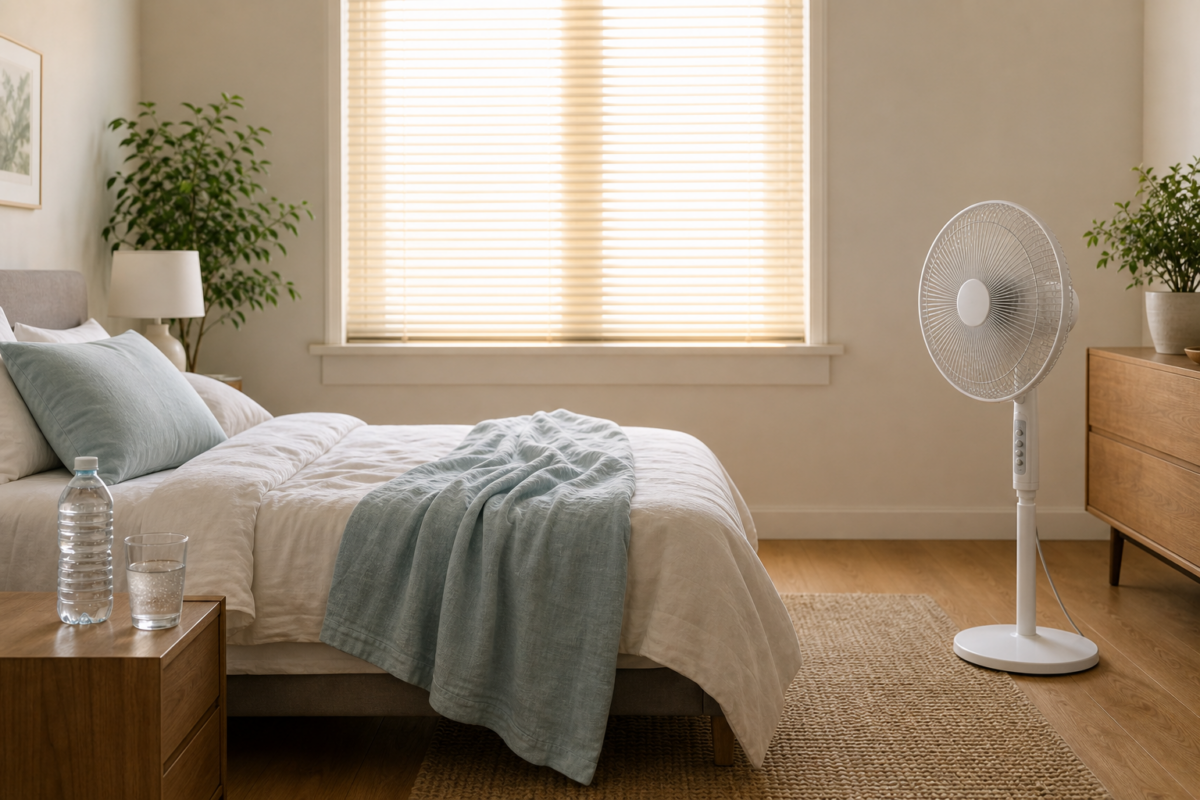
If your bedroom holds heat, do not force yourself to sleep there just because it is the bedroom. Move a light sheet, water, phone charger, and fan to the coolest safe room. If the apartment stays too hot overnight, plan a backup such as a friend’s home, community cooling location, library, shopping center, or another genuinely cooler place.
For bedtime planning, read How to Sleep During a Heatwave. For supplies, use Heatwave Survival Kit: A Practical Checklist.
Common apartment cooling mistakes
Opening windows all day when outdoor air is hotter
This can bring heat inside and make the apartment harder to cool later. Compare indoor and outdoor temperatures before opening up.
Closing blinds after the room is already hot
Blinds work best before direct sun reaches the glass. Once floors and furniture heat up, the room will release that warmth for hours.
Using the oven during peak heat
The oven can warm a small apartment quickly. Save baking, roasting, and long stovetop cooking for cooler hours when you have a ventilation plan.
Expecting a fan to cool the whole apartment
A fan moves air; it does not remove heat like air conditioning. Use it for personal comfort, exhaust, or room-to-room airflow.
Leaving electronics and chargers running
Monitors, consoles, desktop computers, and charger clusters release heat. Turn off what you do not need, especially in the room where you sleep.
Creating humidity with laundry or long steamy showers
Damp indoor air can feel more uncomfortable. Avoid adding steam and moisture to the apartment during the hottest hours.
Trying to cool every room instead of one cooler zone
Focus your effort where you actually sit, work, rest, and sleep. One managed zone is usually more realistic than a whole-apartment makeover.
A simple evening apartment cooling routine
After sunset, check whether outdoor air is cooler and safe. If it is not, keep the apartment shaded and reduce indoor heat sources. If it is, open selected windows, place one fan to exhaust warm air, and use another fan for gentle airflow in the room where you will spend the evening. Turn off extra electronics, switch to light bedding, refill water, and decide early where you will sleep if the bedroom does not cool down.
Frequently asked questions
What is the first thing to do in a hot apartment?
Block direct sun before it hits the windows. Shade is usually the easiest first move because it reduces the heat entering the apartment.
Should I keep apartment windows open all day?
No. Keep windows closed when outdoor air is hotter than indoor air or outdoor conditions are unsafe. Ventilate when outdoor air is cooler and safe.
Can a fan cool my whole apartment?
Not by itself. A fan can help with airflow, exhaust, or personal comfort, but it does not remove heat like air conditioning.
What if my apartment never cools overnight?
Make a backup plan for a genuinely cooler place, especially during official heat alerts or if anyone feels unwell. Household tips cannot make every apartment safe.
Sources and safety guidance
Sources used: CDC About Heat and Your Health, CDC/NIOSH Heat-related Illnesses, and GOV.UK Beat the Heat: keep cool at home checklist. Follow local public-health, emergency management, and weather guidance for your area.